

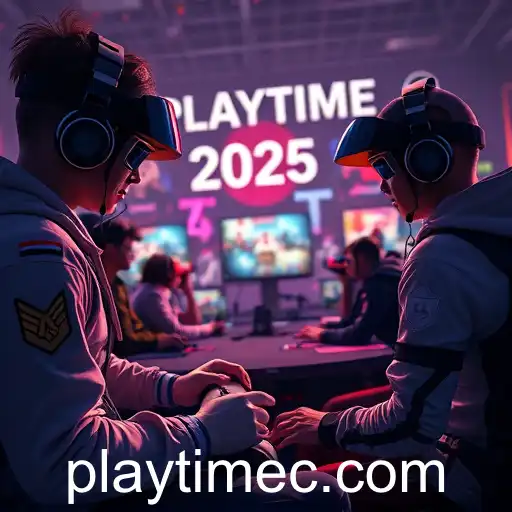

The world of online gaming has undergone significant changes over the past few years, especially as we navigate through 2025. With technological advancements, online gaming is not just about playing video games anymore; it's an amalgamation of social interactions, education, and emerging technologies like virtual reality (VR).
In recent news, the online gaming industry has seen a surge in the implementation of VR, transforming traditional playtime into an immersive experience. Players are no longer limited by the constraints of a 2D screen. Instead, they can explore virtual worlds in a more engaging and realistic manner, breaking the barriers between reality and the digital domain.
Moreover, the culture surrounding online gaming has shifted. It's no longer perceived as a mere pastime for the younger generation. Today, people of all ages are drawn to the intricate and diverse worlds crafted by developers. This expansion of demographic has sparked conversations about inclusivity and representation within games, pushing developers to create content that reflects a wider range of experiences and perspectives.
A report by the Interactive Games and Entertainment Association recently highlighted that the average gamer is not a teenage boy, but rather a 34-year-old adult. This statistic underscores the importance of developing games that cater to a broader audience, ensuring that everyone can find their niche in this expansive digital playground.
Furthermore, playtime is now a valuable tool for education and skill development. Recent dynamics have shown that educational institutions are incorporating game-based learning into their curriculums, recognizing the effectiveness of interactive learning. Games like 'Minecraft' and 'Kerbal Space Program' are particularly popular for teaching subjects ranging from architecture to physics.
Commentary from industry experts suggests that the future of online gaming will continue to integrate artificial intelligence (AI), which will make games more adaptive and personalized. This will undoubtedly enhance player engagement and retain their interest for longer periods.
As we look ahead, the role of online gaming in connecting people worldwide, providing educational resources, and offering entertainment cannot be overstated. The evolution of online gaming culture is a testament to the creativity and innovation that drives this industry forward, redefining what playtime means in 2025.

An in-depth look at how playtime is evolving in the gaming industry amid current global trends.

Exploring the dynamic evolution of playtime through the lens of modern technology and virtual experiences.

A comprehensive look at the significant advancements and trends in online gaming for 2025.

Exploring the transformative changes in online gaming and its societal impact as we journey into 2025.

Exploring the transformation of playtime through digital gaming and its cultural impact in 2025.

Exploring the intersection of playtime and digital innovation in the rapidly evolving gaming industry.
