

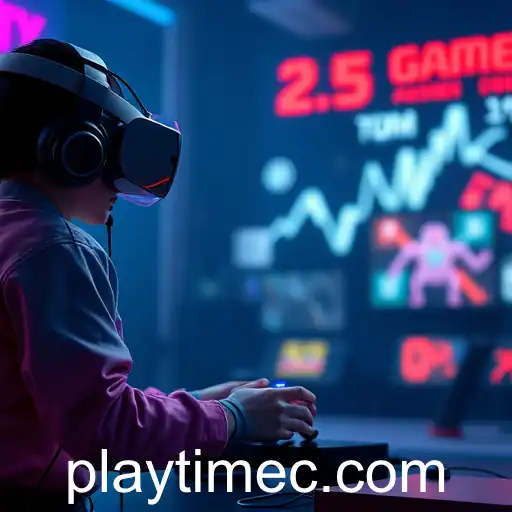

In the ever-evolving landscape of gaming, 'Playtime' has emerged as a pivotal keyword, summarizing the dynamic shifts that are capturing the attention of players globally. With the gaming industry projected to surpass $300 billion in 2025, the term 'Playtime' encapsulates both the leisurely aspect and the immersive commitment of modern gaming experiences.
This year, gaming platforms have introduced innovative features aimed at maximizing engagement. Augmented reality (AR) and virtual reality (VR) headsets have become mainstream, providing immersive experiences that redefine escapism. Titles such as 'Virtual Odyssey' and 'Reality Shift' are not just entertaining but transforming. They exemplify how technology transcends traditional boundaries, enabling games to become not just a pastime, but a fully immersive experience.
Public discourse around 'Playtime' also highlights a significant societal concern: screen time. Reports from health organizations indicate a rising need for balancing gaming with physical activity, prompting an industry-wide conversation about promoting healthy gaming habits. Developers are incorporating wellness reminders and breaks into gameplay, signaling a shift towards more conscious gaming.
From an economic viewpoint, the dynamism of 'Playtime' is evident in the booming indie game sector. Indie developers, once overshadowed by major studios, are now thriving because of digital distribution platforms that facilitate direct access to a global audience. Games like 'Celestial Puzzle' have received critical acclaim while demonstrating the diversity and creative potential of smaller studios.
As we look ahead, the fusion of artificial intelligence (AI) and gaming promises a new frontier. AI-powered NPCs (non-playable characters) are beginning to show human-like responsiveness and learning abilities, potentially changing how storyline dynamics unfold during playtime. This intersection of AI and gaming is poised to revolutionize the industry, offering gamers unprecedented depth and personalization in their virtual adventures.
Ultimately, the notion of 'Playtime' in 2025 is a font of innovation and transformation, signifying not just the hours spent engrossed in gameplay, but the profound ways in which gaming touches our lives and cultures. As the world progresses further into the digital age, how we interact with games and what 'Playtime' represents will continue to evolve, crafting a narrative that binds entertainment with human ingenuity.

Explore the transformation of the gaming industry in recent years and how 'playtime' has taken on a whole new meaning for gamers globally.
Exploring the evolving landscape of online gaming and its impact on culture and technology in 2025.

Exploring the changing landscape of gaming, technology trends, and community dynamics in 2025.

Exploring the latest developments in the world of online gaming as playtime takes on new dimensions in 2025.

Playtime takes the helm in redefining interactive gaming in 2025, merging immersive technology with classic gameplay.

Exploring the transformation of online gaming in 2025 and its impact on entertainment.
